
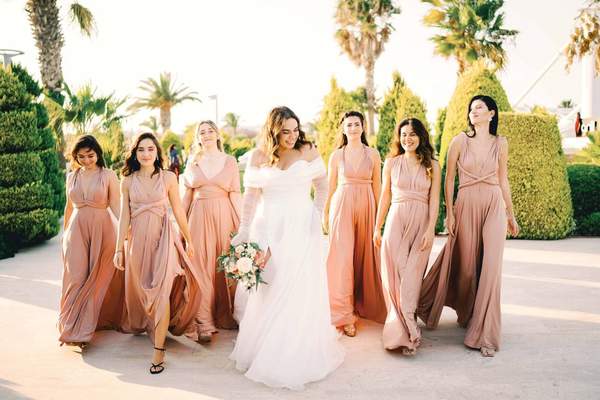
A winter wedding can look magical in photographs, but bridesmaid dresses have a harder job than simply matching the flowers. They need to work during chilly arrivals, formal ceremonies, outdoor portraits and a reception that may be surprisingly warm. The best winter bridesmaid dresses balance an elegant silhouette with fabric, coverage and practical layers suited to the day’s actual schedule. That means planning the full outfit, not choosing a gown and hoping everyone brings a coat.
Start With the Venue, Not the Weather Forecast
Before choosing cold weather bridesmaid dresses, map out where the wedding party will spend time. An indoor hotel celebration with a short walk from the car calls for a different outfit from a countryside ceremony, unheated chapel or snowy photo location. Ask how long portraits will take, whether guests will queue outside and where bridesmaids can store outerwear.
Choose Fabrics for Weight, Drape and Comfort
Velvet for Rich Texture
Velvet is a natural favourite for winter bridesmaid dresses because its soft pile gives deep colours dimension and its generally substantial feel suits formal evenings. Burgundy, forest green, navy and black velvet can look especially striking in candlelit rooms. However, velvet is not automatically the warmest choice: fabric weight, lining and fibre content matter. A heavily lined gown may also feel hot once dancing begins.
Crepe and Structured Satin for Versatility
Medium-weight crepe creates a smooth, sophisticated outline and fits neatly beneath jackets or wraps. Structured satin offers a polished sheen that works well for black-tie celebrations. Check samples rather than relying on fabric names alone; satin describes a weave and can range from thin and fluid to quite substantial. Neither material replaces a proper outdoor layer when temperatures drop.
When Lightweight Fabrics Still Work
Chiffon and airy tulle are less insulating, but they are not off-limits for an indoor winter wedding. Look for a well-lined design, consider longer sleeves and arrange warm cover-ups for any outdoor time. If the party wants mismatched textures, keep colours closely coordinated and order swatches together to see how they respond to the same light.
Build a Seasonal Colour Palette Without Going Too Dark
Deep emerald, wine, plum, midnight blue and chocolate brown are reliable winter choices, particularly in velvet or matte crepe. Yet icy blue, pewter, champagne and muted rose can feel equally seasonal, especially against evergreen arrangements or winter-white flowers. The setting matters more than an unwritten rule that December weddings must use jewel tones.
Test fabric swatches beside the ceremony décor and under both daylight and warm indoor lighting. Two dresses called burgundy may appear noticeably different because velvet absorbs and reflects light differently from satin. If using several shades, choose one undertone, then repeat it in flowers or accessories. For more combinations, consult bridesmaid dress colour ideas when planning the final palette.
Use Sleeves and Length Strategically
Long sleeves can look beautifully formal, especially with a square neckline, fitted bodice or gently flowing skirt. Three-quarter sleeves and higher necklines offer other ways to add coverage without making every bridesmaid wear the same cut. But sleeves alone will not keep anyone comfortable during freezing outdoor photographs.
Make Bridesmaid Wraps Part of the Outfit
Bridesmaid wraps should be chosen alongside the dresses, not bought in a rush during wedding week. A wool or cashmere-blend shawl can provide practical insulation; a lined tailored coat works better for longer stretches outside. Faux-fur stoles add texture and a celebratory finish, although their warmth varies with construction and coverage.
Try a matching colour family rather than insisting every layer be identical. For instance, ivory wraps over dark green dresses create contrast, while charcoal coats over navy gowns keep the look restrained. Check how each layer sits over sleeves and whether it can be removed without disturbing hair or accessories.
At a January wedding with a 20-minute outdoor portrait session, bridesmaids could travel in warm coats and boots, switch to coordinated wraps for selected photographs, then remove both in the heated reception. Planning that changeover is more useful than expecting everyone to stand outside in bare shoulders.
Choose Shoes for the Ground Underfoot
Winter wedding party outfits often fail at footwear. Slim heels may look elegant indoors but become awkward on wet grass, gravel or icy steps. A block heel or secure flat is usually easier to manage, and closed-toe shoes offer more coverage than sandals. Even so, no dress shoe should be assumed safe on ice.
For snowy or slippery locations, bring weatherproof boots with suitable traction for travel and outdoor movement, then change into formal shoes on a dry, safe surface. Keep a cloth available for damp soles before entering the venue. Consider opaque tights where they suit the dress and ask the tailor to check the hem with the final footwear.
Coordinate the Party Without Making Everyone Match
A consistent dress length, one fabric family or a controlled palette can create a cohesive look while allowing different necklines and sleeve shapes. This is especially helpful when bridesmaids have different warmth preferences. Someone who runs cold may choose long sleeves, while another prefers a sleeveless gown with a removable wrap.
Share a simple outfit reference showing each person’s dress, wrap, indoor shoes and outdoor footwear. Set expectations about jewellery and hair accessories without requiring identical purchases. If you are still balancing individual cuts with a unified look, mismatched bridesmaid dress styling offers a useful starting point.
Plan Fittings Around the Entire Winter Outfit
Ask bridesmaids to bring their ceremony shoes, tights and intended underlayers to fittings. Check sleeve movement, dress lining, coat clearance and whether changing shoes alters the hem. Order fabric samples and dresses with enough time for availability checks, delivery and alterations; velvet or seasonal colours may not be offered in every style.
Frequently Asked Questions
What fabric is best for winter bridesmaid dresses?
Velvet is a popular choice for its substantial feel and rich texture, while medium-weight crepe and structured satin can be more flexible between outdoor and heated spaces. Compare actual samples, linings and venue conditions rather than choosing by fabric name alone.
Can bridesmaids wear sleeveless dresses in winter?
Yes, especially at a heated indoor ceremony. Plan warm, coordinated wraps or coats for arrivals and photographs, and make sure the bridesmaids are comfortable with the amount of coverage.
What shoes should bridesmaids wear for a snowy wedding?
Use weather-appropriate boots with traction outdoors, then change to closed-toe formal shoes indoors if desired. Avoid walking on snow or ice in slippery dress soles or delicate heels.
Do all winter bridesmaid dresses need to be the same colour?
No. Related shades can work beautifully when the gowns share a similar level of formality and their undertones are checked together in real lighting.
Keep Warmth and Formality in Balance
The strongest winter bridesmaid looks are designed for movement between spaces: a dress that feels right at the ceremony, thoughtful layers for the cold and shoes that suit the route. Start with the venue and schedule, then choose fabric, colour and accessories as one coordinated outfit. The result can look polished in photographs without leaving the wedding party uncomfortable.