A wedding dress sample sale can put a designer gown within reach, but the lower price comes with different shopping risks. You may be choosing the only available gown, often one that has been tried on or displayed in-store. That makes condition, fit, alteration potential, and the store’s return rules just as important as the price tag.
The best sample gown shopping strategy is to treat the dress as a one-of-a-kind purchase rather than a standard retail order. You are not simply asking, “Do I love this style?” You are also asking, “Can this exact dress be made wedding-ready at a total cost I am comfortable with?”
Know What a Sample Sale Actually Means
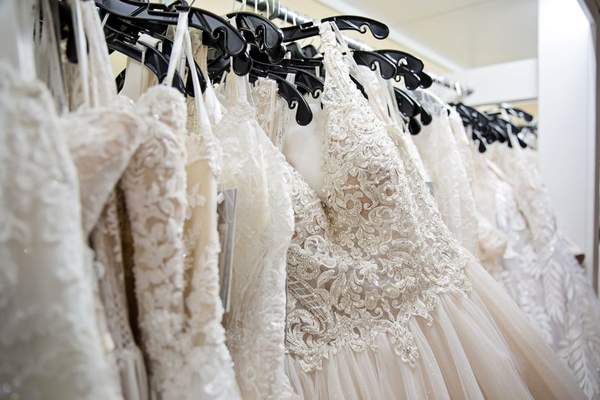
At many bridal boutiques, a sample sale includes floor samples, discontinued designs, overstock, or gowns being cleared from inventory. Some sample wedding dresses may be nearly new, while others show signs of repeated try-ons. Condition can vary widely even within the same event.
Policies vary too. Some boutiques sell sample gowns strictly as-is and final sale, while some retailers allow limited returns on certain online sample-sale purchases. Never assume the rules from one bridal sample sale apply to another. Check the written policy before you pay, especially if the gown cannot be returned, exchanged, held, shipped, or special ordered.
Start With Fit, Not the Number on the Label
Bridal sizing is not always the same as everyday clothing sizing, and it can vary by designer. A label that sounds larger or smaller than expected is not a reason to reject a gown before trying it on. What matters is how the bodice, waist, hips, neckline, and internal structure sit on your body.
A gown that is somewhat too large can sometimes offer more alteration options than one that is significantly too small, but construction matters. Lace placement, boning, beading, illusion panels, corsetry, and seam allowances can affect what a bridal seamstress can realistically change.
Before buying, ask whether the store can recommend an alterations specialist and whether a seamstress can assess the dress. A bridal dress silhouettes and fit guide can also help you prepare before shopping.
Inspect the Exact Gown From Top to Hem
Discounted wedding gowns can be excellent values, but a low price does not make every flaw worth accepting. Inspect the actual dress in good light.
Check the high-contact areas first
Look closely at the neckline, underarms, zipper, buttons, hook-and-eye closures, waist, train, and hem. Also check the lining for makeup, self-tanner, deodorant marks, loose stitching, stretched loops, or small tears.
Look at embellishments from more than one angle
Beading, sequins, appliqués, and lace can hide minor damage when viewed straight on. Turn the gown, lift the train, and compare both sides. A few missing beads may be an easy repair; damaged lace or complicated embroidery can be more difficult to restore.
Photograph anything you may need to repair
If the store permits photos, take close-ups of defects before purchase. You can show them to an alterations professional and get a clearer idea of what may be involved. This also keeps the excitement of the sale from making you forget issues you noticed.
Think in Terms of Total Cost, Not Sale Price
One of the most useful wedding dress sample sale tips is to build an “all-in” budget. The gown price is only one part of the decision. Alterations, professional cleaning, replacement buttons, beadwork repairs, adding a bustle, adjusting straps, or restoring a hem can all add cost.
For example, imagine you find a heavily discounted gown that fits beautifully through the bodice but has a dirty hem, a loose zipper, and a train that needs repair. It may still be a smart purchase if those issues are straightforward and the final total stays within budget. If it also needs major resizing and complex lace reconstruction, the bargain may be less attractive.
A wedding dress alterations guide or bridal budget checklist is a natural next step when comparing the purchase price with likely follow-up expenses.
Ask About Alteration Potential Before You Commit
Do not rely on the assumption that “a seamstress can fix anything.” Some changes are simple; others can alter the shape or design of the gown. Ask specific questions about taking in or letting out the bodice, shortening the hem, adjusting straps, changing cups, repairing zippers, and working around beading or appliqués.
If you are between sizes, focus on whether the critical fitted areas can be altered successfully. When possible, get professional input before making a final-sale purchase.
Shop With a Short Decision Checklist
Sample gown shopping can move quickly, so use a simple checklist before saying yes. Confirm that you genuinely like the dress, not just the discount. Check that you can move, sit, and breathe comfortably. Review visible flaws. Confirm the return or final-sale policy. Ask what is included with the gown, such as detachable straps, sleeves, belts, or matching accessories. Then estimate the likely cleaning and alteration work.
It also helps to bring only one or two trusted people if the sale allows guests. If you already know your preferred neckline, silhouette, and level of formality, you can judge dresses more confidently without rushing.
Do Not Let Scarcity Make the Decision for You
The hardest part of a bridal sample sale is the pressure created by limited inventory. A gown may be unique, another shopper may want it, and the price may feel temporary. A dress is still the wrong purchase if it needs unrealistic alterations, has damage you are not comfortable repairing, or pushes your total budget too far.
Separate urgency from suitability. If you would not choose the gown without the discount sign attached, it probably is not the right dress.
Wedding Dress Sample Sale FAQ
Are wedding dress sample sale gowns used?
Many are store samples that have been tried on by customers, although some sales may also include overstock, discontinued gowns, or pieces with little wear. Ask what type of inventory is included and inspect the exact dress you are considering.
Are sample wedding dresses always final sale?
No. Final-sale policies are common, especially at in-person boutique events, but policies vary by retailer and sales channel. Read the store’s current terms before purchasing rather than assuming a return or exchange is available.
Should I buy a sample gown that is too small?
Only after getting realistic alteration advice. Some gowns have limited seam allowance or construction details that make significant enlarging difficult. A bridal seamstress can tell you whether the needed changes are practical.
How early should I shop a sample sale?
Earlier is generally better because you need time for cleaning, repairs, and alterations after purchase. If your wedding date is close, confirm that your alterations professional can complete the work before you commit.
Choose the Gown, Not Just the Deal
A sample sale can be a smart way to find a beautiful wedding dress for less when you know what to inspect and what questions to ask. Focus on the exact gown’s condition, fit, repair needs, alteration potential, and purchase policy. When the dress still feels right after you have considered the full cost and practical work ahead, the discount becomes a genuine bonus rather than the reason you bought it.