Bridesmaid getting ready outfits are a small wedding purchase with a surprisingly big job. They appear in morning photographs, keep the wedding party comfortable through hair and makeup, and need to come off without disturbing a finished look. The prettiest set in a product photo is not necessarily the one everyone will enjoy wearing.
Robes, Pajamas, or Matching Sets: What Should You Buy?
Bridesmaid robes for easy changes
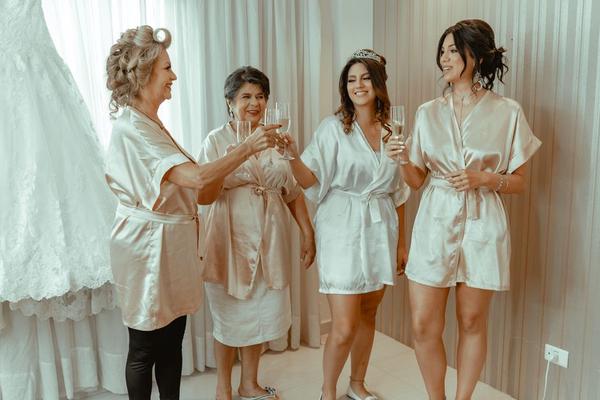
Front-opening bridesmaid robes are a practical classic. A wrap robe slips off without going over styled hair, and its relaxed fit can accommodate different body shapes. Satin-look robes create a soft sheen in photos, while cotton and waffle textures feel more casual. Check the overlap at the front: a robe that gaps whenever someone sits can make the morning uncomfortable.
Look for an attached or secure belt, sleeves that will not drag through makeup, and enough length for seated photographs. Ask bridesmaids what they would feel comfortable wearing underneath. A robe is an outer layer, not necessarily a complete outfit.
Bridesmaid pajamas for more coverage
Bridesmaid pajamas work especially well when the party will eat breakfast together, move between rooms, or spend several hours getting ready. Button-front tops make changing simple; pullovers can catch on hairstyles or makeup. Shorts sets feel relaxed in warmer conditions, while long pants offer more coverage in cool venues.
Pay attention to the actual measurements of the top and bottoms rather than relying on labels such as small or medium. A roomy top with a tight waistband is not comfortable, even when the photograph looks perfect.
Matching getting ready sets beyond sleepwear
Coordinated button-down shirts with shorts, soft lounge sets, or matching separates offer a less traditional alternative. They can be particularly useful when the group prefers different levels of coverage. For example, choose one fabric and color, then allow each person to pick shorts or pants. The photographs still look intentional without forcing identical fits.
Choose a Photo-Friendly Color Scheme
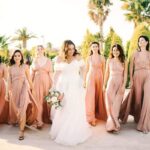
Matching does not have to mean identical. Dusty blue, sage, champagne, and muted pink are popular directions, but the better choice is one that complements the wedding palette and the light in the getting-ready room. Pale colors can look nearly white in bright sunlight, while extremely shiny fabric may reflect flash or window light.
Consider giving the bride a distinct shade or subtle detail, with the bridesmaids in one complementary color. Alternatively, use tonal shades from the same collection. Order fabric swatches when available, or compare customer photographs rather than relying entirely on edited product images.
If you are choosing colors alongside the dresses, think about your bridesmaid dress color palette as a separate decision. The morning outfits should complement the celebration, not have to match the dresses exactly.
Fabric Matters More Than the Product Name
“Satin” describes a weave or finish, not automatically a fiber. A polyester satin robe may offer a glossy look at an accessible price but can feel less breathable than cotton in a warm room. Real silk is another option, often requiring gentler care. Cotton and cotton-rich pajamas are generally easier choices for relaxed, repeat wear.
Check the fabric composition, opacity, washing instructions, and customer comments about static or cling. Light-colored thin material may become see-through under strong window lighting. Embroidery and lace edging can look lovely, but rough seams or scratchy trim are a poor trade-off for a long morning.
Get Every Bridesmaid’s Size and Preferences First
One-size-fits-all is rarely a reliable shopping strategy. Robes vary widely in sleeve length, chest overlap, and overall coverage; pajama sizing varies between retailers as well. Send each bridesmaid the actual seller’s measurement chart and ask for her preferred size and style privately. Offer an alternative if someone would rather wear pants than shorts.
Before checkout, check whether the retailer offers inclusive sizes, separate sizing for tops and bottoms, and an exchange policy. Personalized garments may not be returnable, so confirm spelling and sizes twice before adding names or initials.
A useful test is to imagine sitting in a styling chair for two hours, bending to pick up shoes, and walking past the photographer. If an outfit only works while standing perfectly still, keep shopping.
Plan the Budget Without Paying for Unnecessary Extras
Start with the total amount available, then divide it by the number of people, leaving room for shipping and possible taxes. As a simple example, six outfits at a planned $30 each cost $180 before delivery or personalization. This is a budgeting illustration, not a fixed market price.
Personalized bridesmaid robes can be a thoughtful keepsake, but plain sets often have a longer life after the wedding. If spending is tight, prioritize fabric, fit, and reliable delivery over embroidered titles, gift boxes, or matching slippers. One good-quality piece is more useful than an elaborate bundle nobody wears again.
Who pays is a separate etiquette decision. If matching outfits are required mainly for photographs, covering the cost can avoid putting pressure on bridesmaids. If the group is purchasing its own sleepwear, share a realistic price range and allow choices.
Order Early and Test the Full Morning Look
Build in time for shipping, exchanges, and customization rather than relying on an advertised dispatch estimate. Check the retailer’s current production window and return deadline before ordering, particularly for bulk or embroidered pieces.
Imagine a wedding morning with seven bridesmaids and a photographer arriving halfway through makeup. Place the outfits in labeled bags the night before, ask everyone to wear a front-opening top, and take group photographs before anyone changes into formal attire. That simple plan prevents last-minute searching for missing belts or mismatched sizes.
Keep the wedding morning timeline nearby and set aside a changing area away from drinks and makeup. The same planning approach works for jewelry, shoes, and other bridesmaid accessories.
Frequently Asked Questions
Are robes or pajamas better for bridesmaids?
Choose robes for quick changes and a classic getting-ready look. Choose button-front pajamas when comfort, coverage, and wearing the outfit afterward are higher priorities. Both work well for photographs when properly fitted.
Do all bridesmaids need identical getting ready outfits?
No. Matching colors or fabrics can create a cohesive look even when individuals choose different lengths or styles. Comfort tends to show in photographs more than perfect uniformity does.
Can bridesmaids wear getting ready outfits after the wedding?
Yes, especially when you choose practical pajamas, washable robes, and minimal personalization. Check care labels before buying if easy laundering matters to the group.
When should bridesmaid getting ready outfits be ordered?
Order with enough lead time for the seller’s stated processing and shipping periods, plus an allowance for size exchanges. Customized or international orders deserve a larger buffer than ready-to-ship pieces.
A Comfortable Start Looks Better in Photos
The best bridesmaid getting ready outfits balance three things: a front-opening design, a fit everyone feels good in, and colors that suit the morning. Shop for how the bridal party will actually move, sit, and change—not just how the set looks on a hanger. The photographs will feel more natural, and the outfits may become favorites long after the wedding.